






The Story of Silk Ikat: A Handmade Textile Tradition of Pattern and Color
Few textiles have the visual energy of silk ikat. Its patterns seem to shimmer and move, with edges that are softly blurred rather than perfectly precise. That distinctive look is not a printing effect. It is the result of a painstaking resist-dyeing process carried out before the fabric is woven.
What Is Ikat?
Ikat is a textile-making technique in which threads are tied and dyed in sections before they are placed on the loom. As the prepared threads are woven together, the colors align to form a pattern. Because the threads shift slightly during weaving, the finished design has the characteristic feathered edges that make ikat so recognizable.
The word ikat is often associated with the idea of tying or binding. The name describes the essential step in the process: protecting selected parts of the threads from dye so that the final pattern is revealed gradually through weaving.
How Silk Ikat Is Made
Creating a silk ikat textile takes planning, patience, and a highly practiced eye. While methods vary by region and workshop, the process generally follows these stages:
- Designing the pattern: The artisan plans the arrangement of color and motif across the finished textile.
- Binding the threads: Sections of the yarn are tightly wrapped to resist the dye.
- Dyeing in layers: The threads may be dyed more than once, with additional sections tied between colors.
- Setting up the loom: The dyed warp threads are carefully arranged so the pattern can emerge during weaving.
- Weaving the cloth: The weft passes through the prepared warp, bringing the design to life.
Silk makes the result especially luminous. Its smooth fibers catch the light, allowing the colors to shift subtly as the textile moves.
Why Ikat Patterns Look Slightly Soft
In a printed textile, a pattern is applied directly to an already woven surface. In ikat, the design exists in the threads before weaving begins. Even with careful alignment, the threads move a little as they are woven together. That slight movement creates the soft, almost painterly outline that collectors value.
Small variations are part of the beauty of a handmade ikat. They show that the pattern was built through a human process rather than reproduced by a machine. No two artisan-made pieces will have exactly the same rhythm of color and line.
How to Style Silk Ikat at Home and Away
Silk ikat is a statement textile, so it works beautifully when it is given room to be noticed. Try these simple styling approaches:
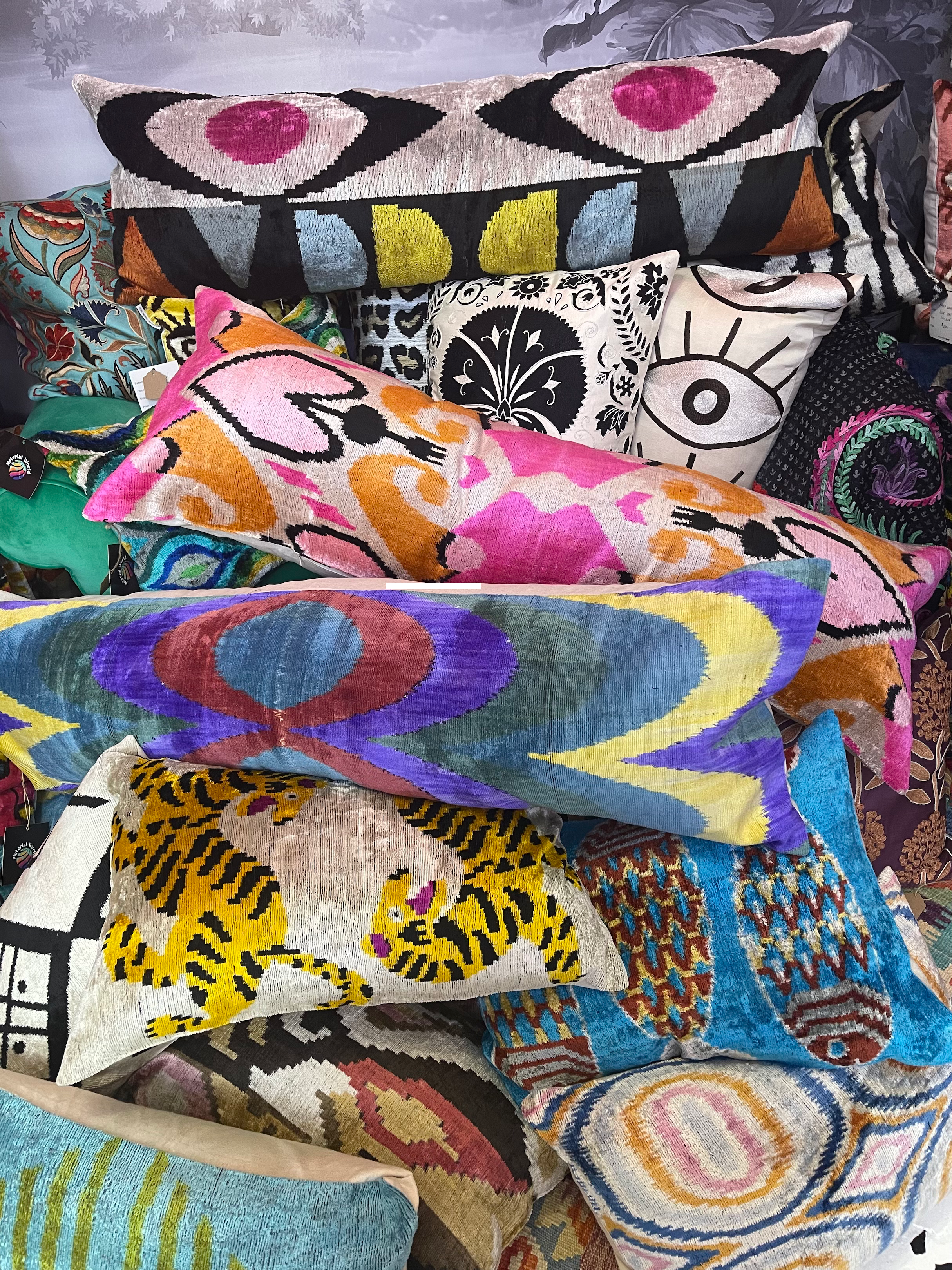
- Make it the accent: Pair an ikat pillow or textile with solid-colored upholstery and natural materials such as wood, rattan, or linen.
- Repeat one color: Choose a shade from the ikat pattern and echo it elsewhere in the room with a vase, artwork, or throw.
- Balance pattern with texture: Combine the movement of ikat with quieter woven fabrics, nubby cotton, or matte ceramics.
- Keep the palette intentional: If the pattern is colorful, let the surrounding pieces stay simple so the craftsmanship remains the focal point.
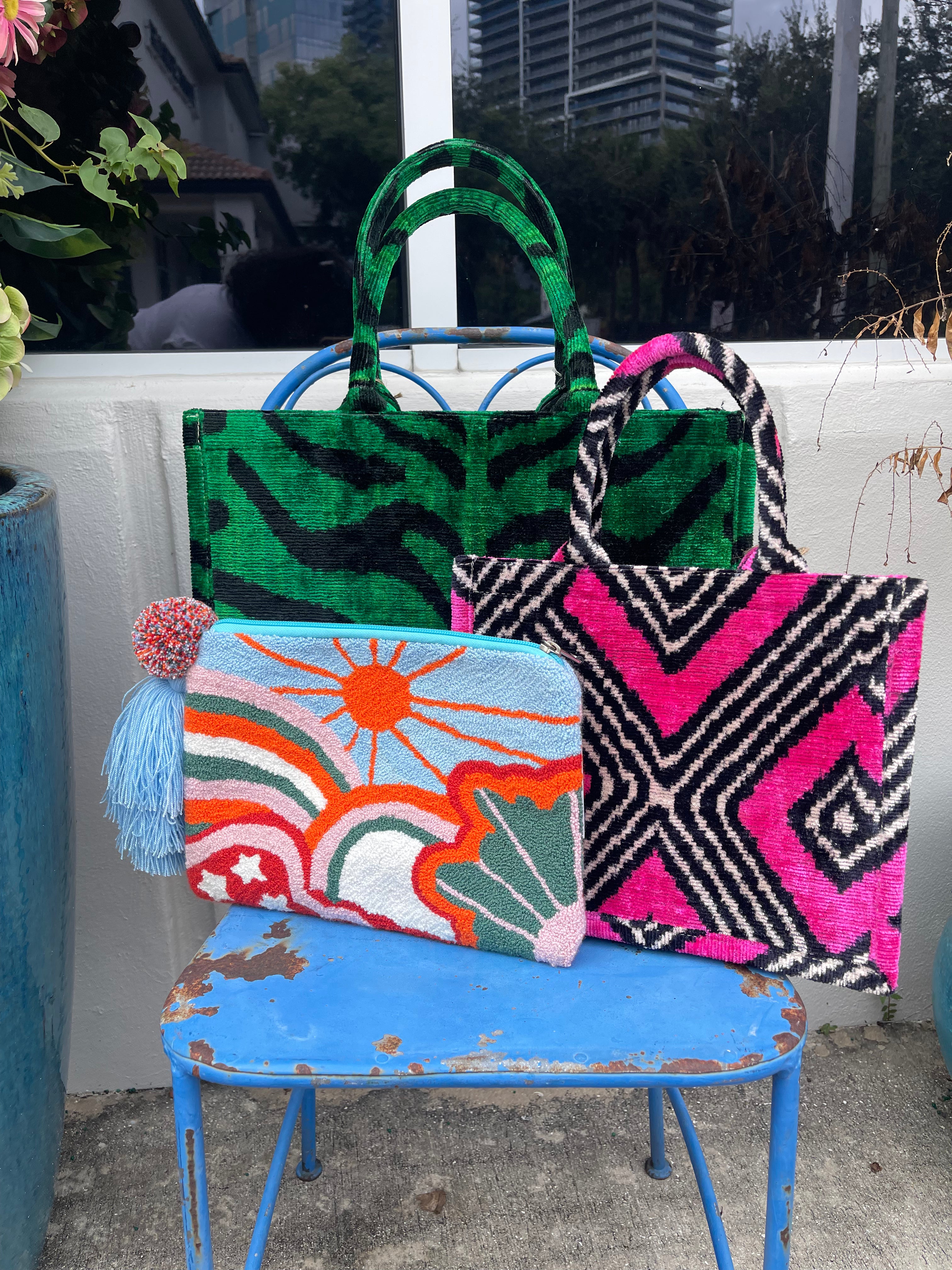
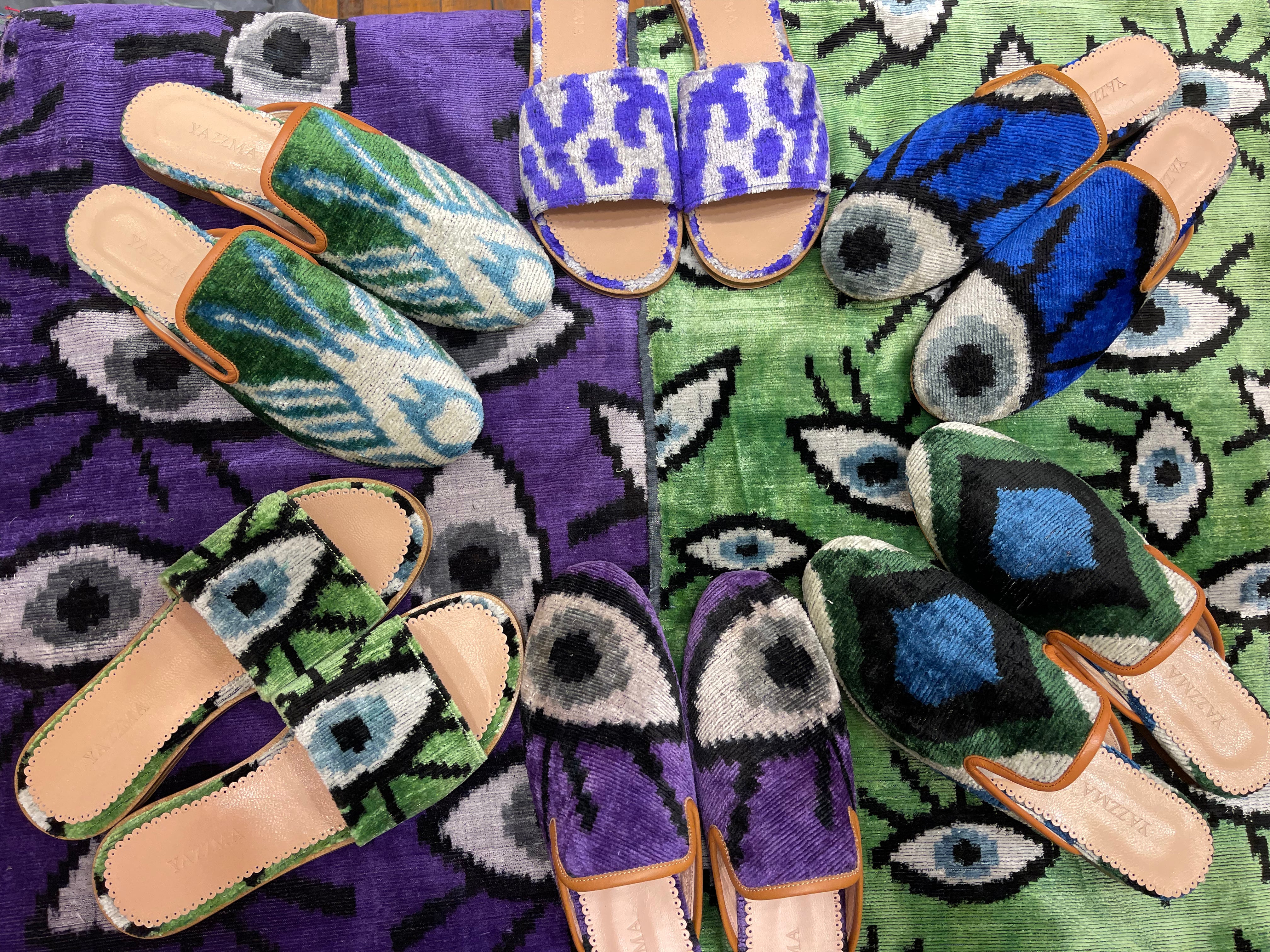
- Take the story with you: Silk ikat accessories can bring the same color and pattern play to an everyday outfit without requiring a complete wardrobe overhaul.
Why Choose Artisan-Made Ikat?
An artisan-made ikat carries more than a beautiful pattern. It represents time, skill, and knowledge passed through a living textile tradition. Choosing handmade pieces also means welcoming natural variation: a slightly shifted motif or subtle difference in color is evidence of the making process.
At Material World, our artisan-made collections are sourced with fair trade values and a commitment to celebrating the women artisans behind the work. When you choose a silk ikat piece, you are choosing a textile with a visible human story, designed to be enjoyed rather than replaced when the next trend arrives.
Bring Silk Ikat Into Your Collection
Explore our silk ikat shoes and slides for an easy way to add handmade pattern to your style. For a softer home and travel accent, browse our collection of pashmina wraps, silk pillow cases, eye masks, ties, scarves, and bed runners.
Leave a comment