






What Is a Berber Basket? A Guide to Handwoven Moroccan Storage and Decor
If you've been drawn to those beautiful coiled baskets showing up in interior design shoots and home organization content, there's a good chance you're looking at a Berber basket — and there's a rich, centuries-old story woven into every one.
Who Are the Berber People?
The Berber people — also known as the Amazigh — are the indigenous peoples of North Africa, with roots stretching across Morocco, Algeria, Tunisia, and beyond. Their weaving and basketry traditions date back thousands of years, passed down through generations of women who mastered the craft of transforming natural grasses, palm leaves, and reeds into durable, functional art.
In Morocco's rural villages, basket weaving has long been both a livelihood and a cultural language — the patterns, colors, and shapes carrying regional identity and personal meaning.
What Makes a Berber Basket?
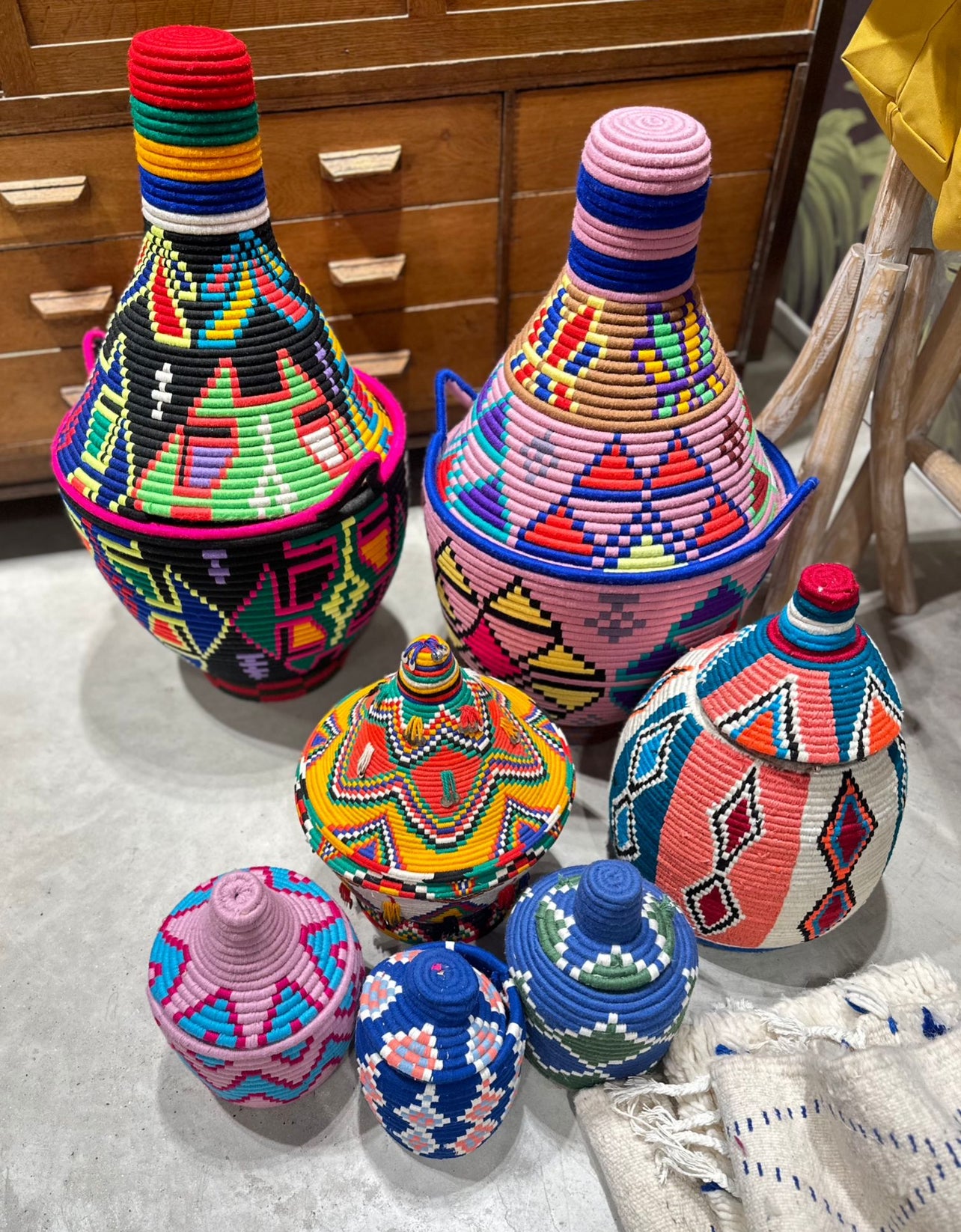
Authentic handwoven Berber baskets are made using a coiling technique: a core of dried grass or palm fiber is tightly wrapped and stitched into spiraling layers, building the basket from the base outward. The process is entirely by hand and can take anywhere from a few hours to several days depending on size and complexity.
Key characteristics to look for:
- Natural materials — dried sweetgrass, palmetto, or doum palm fiber
- Tight, even coiling — a hallmark of skilled craftsmanship
- Geometric patterns — diamonds, triangles, and abstract Amazigh symbols woven in naturally dyed fibers
- Flat or open-top forms — the iconic flat tray style, as well as lidded storage baskets and wall-hanging versions
How to Use Berber Baskets in Your Home
One of the reasons Berber baskets have become a staple in modern interiors is their versatility. Here are some of our favorite ways to style them:
- Wall art: Group three to five baskets of varying sizes in a gallery-wall arrangement. Mix textures and tones for an organic, layered look.
- Storage with soul: Use them on open shelves or sideboards to corral mail, remotes, keys, or small toys — practical and beautiful.
- Bread and fruit display: Flat tray baskets are perfect for serving or displaying fruit, bread, or even small potted succulents on a dining table.
- Entryway catch-all: A large lidded basket near the front door is the perfect place for scarves, dog leashes, and daily essentials.
- Plant pot covers: Tuck a terracotta pot inside a basket to add warmth and texture to any indoor plant display.
Why Buying Berber Baskets Matters
At Material World, every basket in our collection is sourced directly from women artisans in Morocco through fair trade practices. That means the women who make them are paid fairly, work in safe conditions, and retain ownership of their craft.
When you buy a handwoven Berber basket, you're not just buying a beautiful object — you're supporting a skilled artisan's livelihood, preserving an ancient tradition, and choosing a product made with genuine care rather than mass production.
No two baskets are exactly alike. Slight variations in color, size, and pattern are part of the authenticity — signs of a human hand at work, not a factory mold.
Shop Our Berber Basket Collection
We carry a curated selection of handwoven Berber baskets — from flat wall trays to lidded storage baskets and decorative catch-all styles. Each one is artisan-made, fair trade sourced, and ready to bring warmth and texture to your home.
Leave a comment